

Top 7 Fastest Supercomputers in the World (2025 Rankings & Exascale Performance)

In 2025, the race toward exascale computing has transformed the global high-performance computing (HPC) landscape. The newest generation of supercomputers delivers previously unimaginable levels of throughput, enabling breakthroughs in climate science, artificial intelligence, drug discovery, national defense, and energy modeling. This article explores the Top 7 Fastest Supercomputers in the World in 2025, their architectures, performance metrics, use cases, and what makes them technological milestones.
What Defines the World's Fastest Supercomputer? (Exascale, FLOPS & Benchmarks)
The standard measure of raw HPC performance is FLOPS (floating-point operations per second). Systems that exceed one exaFLOP—one billion billion operations per second—are classified as exascale machines. However, being fast is not enough. Modern HPC leadership also requires:
- Hybrid CPU-GPU architecture for accelerated workloads
- Energy efficiency optimized for power-hungry simulations
- High memory bandwidth for parallel scientific modeling
- Scalability for AI and machine learning operations
The TOP500 List evaluates and ranks supercomputers through the LINPACK benchmark, an industry standard that measures a machine’s ability to solve large mathematical systems. However, modern HPC also considers heterogeneous performance: NVIDIA H100 GPUs, AMD Instinct MI300A accelerators, and Intel Data Center GPU Max cards all contribute to real-world workloads such as computational physics, weather modeling, seismic analysis, and neural network training.

TOP500 Rankings of 2025 – Rising Competition Across Continents
The 2025 TOP500 rankings reveal an increasingly competitive global HPC environment. The United States continues to lead with several exascale-capable systems, but Europe, Japan, and China are quickly closing the gap. Europe’s investment through the EuroHPC Joint Undertaking has accelerated deployment of sustainable data centers, while Japan continues leveraging ARM-based processors for scientific workloads. China is investing heavily in domestic chip architectures and high-bandwidth networking for national research.
Several important trends emerge in 2025:
- Hybrid CPU-GPU dominance for AI simulation workloads
- Cloud HPC growth through platforms such as Microsoft Azure
- Energy-aware exascale designs to reduce power consumption
- ARM-based innovation driving alternative HPC architectures
These trends indicate a future where supercomputing is not limited to national laboratories, but instead becomes part of distributed research ecosystems, commercial machine learning workloads, and industrial modeling environments. This shift is similar to the cloud AI trends highlighted in global AI growth forecasts, where compute accessibility is a major driver of innovation.
Top 7 Fastest Supercomputers in the World (2025 Rankings)
1. El Capitan – United States (LLNL)
El Capitan, located at Lawrence Livermore National Laboratory (LLNL), stands as the fastest supercomputer in the world in 2025. Capable of surpassing 1.74 exaFLOPS, it is a collaboration featuring AMD EPYC CPUs and AMD Instinct MI300A GPUs. The system supports advanced AI acceleration for climate modeling, genomics, fusion energy simulations, and secure defense computing. El Capitan embodies the U.S. strategy of maintaining computational dominance through synergy between government labs and semiconductor leaders.
2. Frontier – United States (Oak Ridge National Laboratory)
Frontier was the world’s first operational exascale system and continues to exceed 1.1 exaFLOPS in 2025. Built on AMD Instinct MI250X accelerators, Frontier drives nuclear research, quantum simulation, materials science, and AI-enhanced modeling. Its ability to balance raw speed with power efficiency has influenced future exascale system designs globally.
3. Aurora – United States (Argonne National Laboratory)
Aurora is Intel’s flagship exascale supercomputer. With Intel Xeon CPUs paired with Data Center GPU Max accelerators, Aurora is optimized for AI training, drug discovery, cancer research, and large-scale data analytics. Its hybrid architecture allows researchers to unify HPC modeling with machine learning pipelines.
4. JUPITER Booster – Europe (EuroHPC)
JUPITER Booster is Europe’s first exascale-class HPC installation. Operating under EuroHPC initiatives, the system focuses on energy-aware computing for climate, AI, and renewable energy simulations. Using AMD Instinct MI300A accelerators, it highlights Europe’s push toward technological sovereignty and sustainable computing infrastructure across Germany, Italy, and Finland.
5. Eagle – United States (Microsoft Azure Cloud)
Eagle represents the ascent of cloud-powered HPC. Built on NVIDIA H100 GPUs, Eagle enables industrial AI, machine learning, weather modeling, and materials science simulations without requiring physical laboratory installations. Its hyperscaler deployment model demonstrates how cloud computing can democratize global HPC research, similar to drone-based computation trends explored in this aerial technology guide.
6. HPC6 – Italy (CINECA)
HPC6 operates under Italy’s CINECA consortium and specializes in genomics, climate modeling, and high-throughput data analysis. Leveraging AMD EPYC processors and MI250X GPUs, HPC6 exemplifies Europe’s focus on sustainable, energy-efficient computing frameworks under the EuroHPC umbrella.
7. Fugaku – Japan (RIKEN)
Fugaku remains one of the most impactful HPC systems due to its ARM A64FX processor architecture. Fugaku excels at parallel workloads, seismic forecasting, and AI-driven climate analysis. Japan’s prioritization of ARM-based efficiency solutions provides critical diversity in global HPC hardware ecosystems, reducing dependency on x86-centric architectures.
Comparison Table – Performance, Architecture & Applications
| Rank | Supercomputer | Location | Peak Performance | Architecture | Efficiency | Main Uses |
|---|---|---|---|---|---|---|
| 1 | El Capitan | USA (LLNL) | 1.74 ExaFLOPS | AMD EPYC + MI300A | High | Climate, Genomics, AI |
| 2 | Frontier | USA (ORNL) | 1.1 ExaFLOPS | AMD EPYC + MI250X | High | Nuclear, Physics, AI |
| 3 | Aurora | USA (ANL) | 1.0 ExaFLOPS | Intel Xeon + GPU Max | Moderate | Medical, AI, Climate |
| 4 | JUPITER Booster | Europe | 1.0 ExaFLOPS | AMD EPYC + MI300A | High | Energy, AI, Climate |
| 5 | Eagle | USA (Azure) | 0.75 ExaFLOPS | NVIDIA H100 Cloud | High | AI, ML, Research |
| 6 | HPC6 | Italy (CINECA) | 0.50 ExaFLOPS | AMD EPYC + MI250X | High | Genomics, Climate |
| 7 | Fugaku | Japan (RIKEN) | 0.44 ExaFLOPS | ARM A64FX | High | AI, Seismic, Climate |

Which Countries Lead the Supercomputing Race in 2025?
The United States maintains its lead with El Capitan, Frontier, and Aurora. Europe follows through EuroHPC systems such as JUPITER Booster and HPC6, emphasizing renewable energy-aware computing. Japan maintains leadership in scientific modeling with Fugaku, while China develops domestic AI accelerators and large-scale simulation platforms—although not all performance figures are publicly disclosed.
These computational trends directly support emerging national AI strategies, automation frameworks, and digital transformation policies, complementing future-oriented reports such as the AI workforce automation landscape.
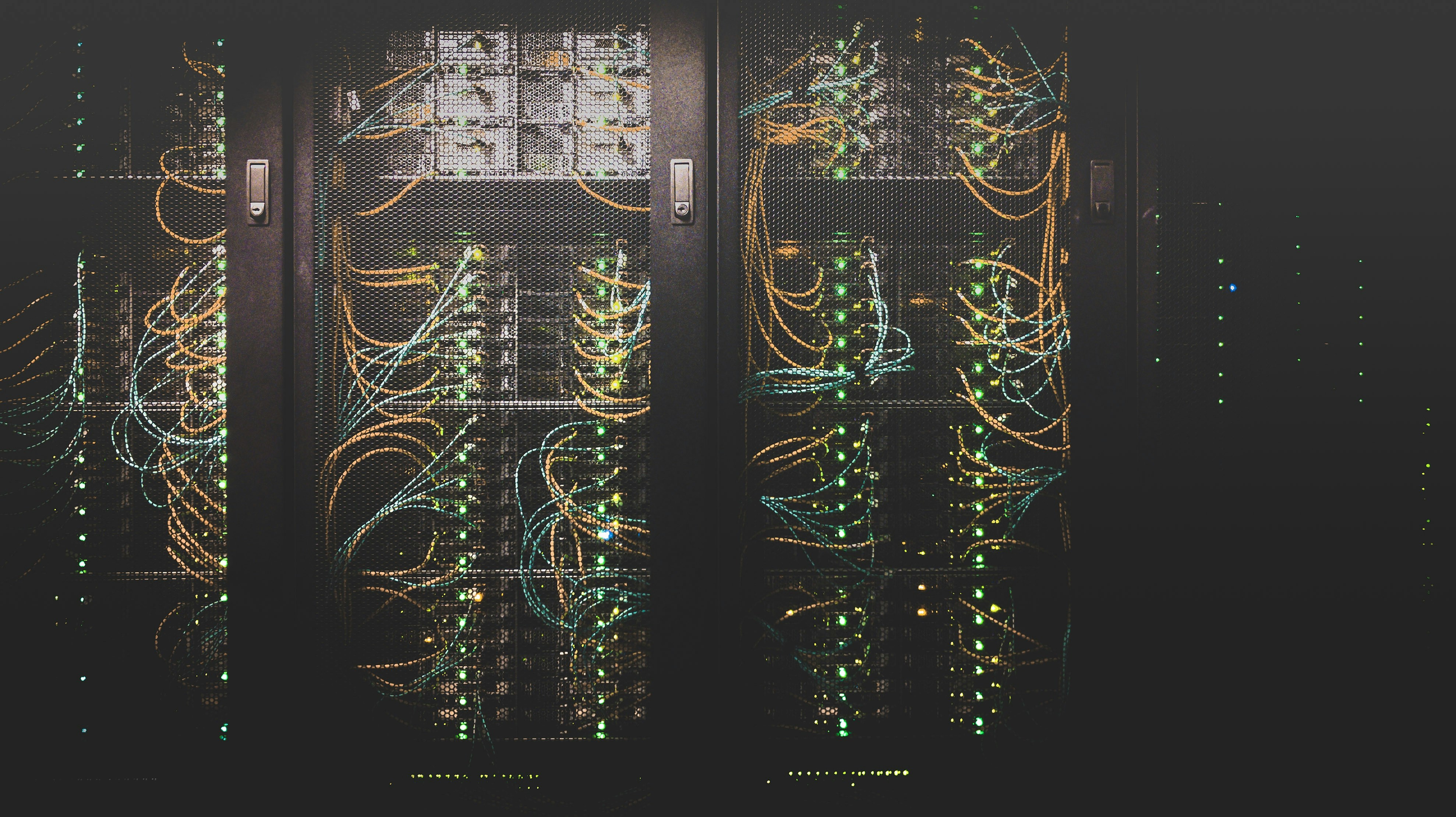
Applications of the Fastest Supercomputers in 2025
Exascale-class systems are critical to advancements in:
- Artificial Intelligence & Machine Learning — neural network training, model optimization
- Climate & Weather Modeling — hurricane forecasting, carbon cycle modeling
- Medical & Genomics Research — cancer drug discovery, protein folding
- Defense & National Security — encryption, cyber defense, nuclear simulation
- Energy & Materials Science — fusion research, semiconductor design
These workloads demand massive parallel processing, ultra-fast memory, high bandwidth networking, and energy-conscious compute pipelines.
Future Outlook – What Comes After Exascale?
The next generation of supercomputers will involve:
- Quantum–HPC hybrid computing for cryptography and chemistry
- Photonic interconnects to reduce thermal bottlenecks
- Chiplet-based GPUs for modular scaling
- Ultra-low power ARM & RISC-V HPC designs
- Cloud-distributed supercomputing for democratized access
These developments suggest a transition beyond exascale into zettascale computing by the mid-2030s, assuming adequate breakthroughs in cooling, interconnects, and semiconductor packaging.
Frequently Asked Questions (FAQ)
What is the fastest supercomputer in the world in 2025?
What does exascale computing mean?
Which countries lead global HPC rankings?
What are these supercomputers used for?
How is cloud-based HPC changing the landscape?
References & Sources
- Wikipedia – Supercomputer
- Wikipedia – TOP500 Project
- Statista – Global Supercomputing Overview
- Lawrence Livermore National Laboratory
- EuroHPC Joint Undertaking
About the Author

Zakir Hussain creates educational content on History, Science, World Affairs, Technology, Nature, Sports, and Tech Reviews. His goal is to provide fact-based and reader-friendly information.
📩 thedeepbyte@gmail.com


0 Comments