The World’s Highest Mountains: Top 10 Stunning Peaks (New Edition)

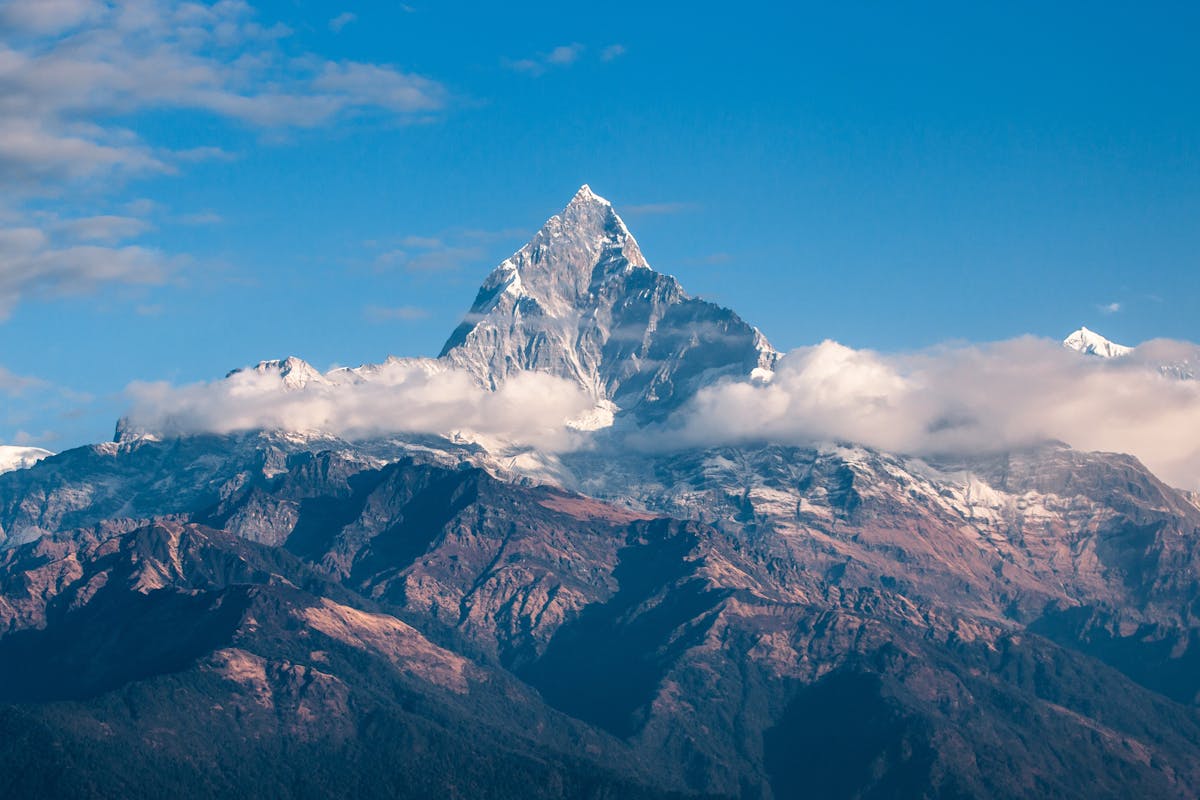
 From the icy ridges of the Himalayan mountain range to the rugged peaks of the Karakoram range, the world’s highest mountains continue to capture the hearts of adventurers and dreamers alike. These snow-capped peaks rise above the clouds, shaping cultures, weather, and the spirit of exploration itself.

the-worlds-highest-mountains-top-10-stunning-peaks-new-edition

In this edition, we journey across continents to reveal the top 10 mountains by height, uncovering fascinating stories, extreme mountain climbing challenges, and breathtaking natural beauty. Whether you’re a climber, traveler, or simply curious about  the  highest peaks on Earth, this guide will take you closer to the roof of the world than ever before.

What Makes a Mountain the “Highest”?

The height of mountains is calculated between sea level and the top of the mountain and not between the base and the top. This is why Mount Everest is the highest mountain in the world although it is not the tallest in terms of the base to peak distance. The highest point of some mountains, such as Mauna Kea in Hawaii, is higher upon their submerged base, though the official height of Everest is 8,848.86 meters (29,031.7 feet), which has been the point of contention.

Above 8000 meters above sea level, there are mountains that are above 8,000 meters and are also known as the 8000 meter peaks, or as commonly called, the death zone above 8000m. In this case, the concentration of oxygen becomes dangerously low, and the survival depends on the altitude sickness and acclimatization. It takes weeks of adjustment by climbers before they make the final summit push.

The Himalayan Giants — Home to the Tallest Peaks on Earth

The Himalayan mountain range is located in Nepal, Tibet, India, Bhutan and Pakistan that ensure that 9 out of the 10 highest mountains in the world can be found there. K2 is also one of the fiercest mountain ranges in the Karakoram Range that can be found between Pakistan and China.

This is a part of the world also known as the Roof of the world, which is where the sky and the earth meet. It has snow-capped mountains overpowering most of the landscapes and ancient cultures take it seriously in Asia as its sanctuaries. The Himalayas are not a place for climbers only, it is a geology, religious, and exploration museum.

Mountain Range

Countries Covered

Famous Peaks

Himalayan Range

Nepal, India, Tibet, Bhutan

Everest, Lhotse, Makalu

Karakoram Range

Pakistan, China

K2, Broad Peak, Gasherbrum I

Hindu Kush Range

Afghanistan, Pakistan

Tirich Mir, Noshaq

Top 10 Highest Mountains in the World (With Facts & Locations)

Each mountain tells a story — of famous mountain expeditions, courage, and the eternal pull of the unknown. Here’s an exploration of the ten highest peaks on Earth and the mystique they hold.

1. Mount Everest (8,848.86 m) – The Roof of the World

Mount Everest, the highest mountain of the Himalayan Range, which is shared by Nepal and Tibet is the ultimate test of human strength. It has attracted explorers in more than 100 years in Nepal and Tibet, as Sagarmatha and Chomolungma.

mount-everest-the-roof-of-the-world


In 1953, Sir Edmund Hillary and Tenzing Norgay Sherpa made the first successful climb and this changed history. The Nepalese side has today attracted thousands of base camp trekking yearly. The death zone above 8,000 meters is deadly even with its popularity because the wind rises to over 200 mph and the oxygen level falls to one-third of those at sea level.

2. K2 (8,611 m) – The Savage Mountain

K2 (Mount Godwin-Austen) is magnificent and merciless, and is found in the Karakoram range between China and Pakistan. The Savage Mountain, as it is commonly referred to, is the most of the dangerous mountains to climb following the Annapurna I.

k2-the-savage-mountain


It has steep pyramid structure and unpredictable weather, which makes it almost impossible to save anyone. There are no smooth ways to the top as there are in Everest. However, the beauty and solitude of K2 has turned it into a legend in mountain climbing.

3. Kangchenjunga (8,586 m) – The Five Treasures of Snow

Kangchenjunga is one of the divine mountains in Asia that stands on the boundaries between Nepal and India. It is local folklore the Five Treasures of Snow, denoting gold, silver, gems, grain, and sacred texts.

kangchenjunga-the-five-treasures-of-snow


It is believed to have been the tallest in the world until 1852. Climbers usually halt inch of the actual peak because of the beliefs of locals. It is one of the least ascended 8000 meter peaks due to its distance and its regular avalanches.

4. Lhotse (8,516 m) – Everest’s Twin Peak

Lhotse, which is located next to Everest, has much of the climbing route of the Everest Base Camp. It is called in Tibetan as South Peak. The South Col summit push is steep and icy burdening the climbers to the extremes.

lhotse-everests-twin-peak


Lhotse is a mountain lost to the shadow of Everest which has great ridges and dramatic face that has made it one of the most photographed snow-capped mountains in the world.

5. Makalu (8,485 m) – The Pyramid of the Himalayas

Makalu is like a perfect pyramid high on the pyramid just 19km Southeast of Everest. It is aesthetically strong, having four sharp ridges with steep angles. It is found between Nepal and Tibet, and is at an isolation that gives the trek in the Himalayan Range one of the most peaceful.

makalu-the-pyramid-of-the-himalayas


Makalu is a mountain that requires technical skills because it has knife-edge ridges and is frozen. Nonetheless, it is appealing to experienced climbers who want to have a lower profile challenge than Everest.

6. Cho Oyu (8,188 m) – The Turquoise Goddess

The Nepal-Tibet border has Cho Oyu, or Turquoise Goddess, which is just 20km west of Everest. It is considered one of the simplest 8000 meters mountains and is the training site of Everest-bound climbers.

cho-oyu-the-turquoise-goddess


Its broad slopes and accessible base camp trekking routes make it popular among climbers seeking breathtaking views without extreme technical difficulty.

7. Dhaulagiri I (8,167 m) – The White Mountain

Dhaulagiri I is completely based in Nepal and it translates to White Mountain. It is among the most scenic mountains as it has a vertical ascent above Kali Gandaki Valley.

dhaulagiri-i-the-white-mountain


The Swiss-Austrian team was the first to scale it in 1960. The mountain climbing in Nepal today is mostly accompanied by the panoramic sights of the shining white top of Dhaulagiri, a soul-soothing confirmation of nature, the perfect design.

8. Manaslu (8,163 m) – The Mountain of the Spirit

In Nepal also, Manaslu is translated as Mountain of the Spirit. It is also known to have a base camp trekking that is not as noisy as Everest. Manaslu Circuit Trek has turned out to be one of the most scenic paths in Nepal.

manaslu-the-mountain-of-the-spirit


Its initial climb in 1956 by a Japanese team built a good cultural bond between Nepal and Japan. Manaslu is a beautiful mountain appreciated by climbers because of its isolation, peace and spiritual calm.

9. Nanga Parbat (8,126 m) – The Killer Mountain

In Pakistan’s Gilgit-Baltistan, Nanga Parbat stands as a colossal sentinel of the Himalayan Range. Nicknamed the “Killer Mountain,” it has claimed more lives than almost any other peak.

nanga-parbat-the-killer-mountain


Its Rupal Face, rising nearly 4,600 meters, is the world’s tallest mountain face. Despite its dangers, it remains a magnet for climbers chasing the raw thrill of the wild.

10. Annapurna I (8,091 m) – The Deadliest Climb

It is in the central part of Nepal that Annapurna I is known as the highest fatality among the 8000 meters. Its avalanches and unsteady slopes render it dangerous even to the experts.

annapurna-i-the-deadliest-climb


Nevertheless, the Annapurna Circuit Trek is one of the most scenic trails in the globe, which continues to draw thousands of people to the area because of its scenery, villages and its cultural diversity.

Rank

Mountain

Height (m)

Location

Range

Notable Feature

1

Mount Everest

8,848.86

Nepal/Tibet

Himalayan Range

Highest on Earth

2

K2

8,611

Pakistan/China

Karakoram Range

Most dangerous

3

Kangchenjunga

8,586

Nepal/India

Himalayan Range

Sacred mountain

4

Lhotse

8,516

Nepal/Tibet

Himalayan Range

Twin of Everest

5

Makalu

8,485

Nepal/Tibet

Himalayan Range

Pyramid shape

6

Cho Oyu

8,188

Nepal/Tibet

Himalayan Range

Easier 8000er

7

Dhaulagiri I

8,167

Nepal

Himalayan Range

White Mountain

8

Manaslu

8,163

Nepal

Himalayan Range

Spiritual beauty

9

Nanga Parbat

8,126

Pakistan

Himalayan Range

Killer Mountain

10

Annapurna I

8,091

Nepal

Himalayan Range

Deadliest climb

The Tallest Mountain on Each Continent (The Seven Summits)

For climbers seeking global adventure, conquering the Seven Summits — the tallest mountain on each continent — is the ultimate goal. From Mount McKinley (Denali) in North America to Mount Vinson in Antarctica, these peaks test endurance and passion.

the-tallest-mountain-on-each-continent-the-seven-summits


Continent

Tallest Peak

Height

Country

Asia

Mount Everest

8,848.86 m

Nepal/Tibet

South America

Aconcagua

6,961 m

Argentina

North America

Denali (McKinley)

6,190 m

USA

Africa

Kilimanjaro

5,895 m

Tanzania

Europe

Mount Elbrus

5,642 m

Russia

Antarctica

Mount Vinson

4,892 m

Antarctica

Australia/Oceania

Puncak Jaya (Carstensz Pyramid)

4,884 m

Indonesia

Seven Summits vs. Eight-Thousanders — What’s the Difference?

The Seven Summits represent the highest points on each continent, while the Eight-Thousanders are the 14 peaks over 8,000 meters. The Eight-Thousanders, found only in Asia, require expert climbing skills and survival in the Death Zone.

For example, summiting Kilimanjaro is achievable without oxygen, but climbing K2 or Annapurna I demands acclimatization, technical skill, and immense willpower.

Climbing the World’s Highest Peaks — Challenges & Dangers

Mountaineering is not only reaching the peak but survival. The Death Zone starts at an altitude of above 8,000 meters, where the oxygen levels become below the required ones in the human body.

Threats are always there in the form of altitude sickness, frostbite and exhaustion. Sherpas, whose stamina is beyond compare, will take climbers across base camps, ice-ridges, and thin-air peaks. Any successful ascent is supremacy of the spirit and science united.

Sacred Significance of the World’s Tallest Mountains

In Asia, there are numerous tallest mountains in the world that are perceived to be divine. The locals venerate Kangchenjunga, Mount Kailash, and Annapurna. These are Asian mountains that are not merely landmarks but they are temples in the sky.

According to the pilgrims, there are deities residing in these snow-capped mountains. Even the climbers get a spiritual connection since they walk the path of the meeting of heaven and earth.

Most Dangerous Mountains to Climb (Fatality Rate Comparison)

While all 8000 meter peaks are dangerous, some are especially deadly. Below is a comparison of the fatality rates for the most perilous climbs.

Mountain

Fatality Rate

Reason

Annapurna I

32%

Frequent avalanches

K2

29%

Harsh weather, technical ascent

Nanga Parbat

22%

Rockfall and exposure

Dhaulagiri I

16%

Steep ice slopes

Makalu

12%

High winds, remoteness

These numbers remind us that the mountaineering challenges faced here are not for fame, but for the call of the mountains themselves.

Trekking and Tourism Around the World’s Highest Peaks

Base camp trekking and trekking in Nepal have emerged as the best destinations to the international traveler. Everest Base Camp, Annapurna Circuit and Manaslu Trek will provide an in-depth experience in the mountain villages and the World Heritage UNESCO sites.

Tourism supports the local economies and it also puts the weak nature under pressure. When trekking is responsible, these mountain ranges across the world will be maintained in a clean state even to the next generation.

The Future of Mountaineering — Climate Change and Glacial Retreat

Himalayas are changing its landscape due to the climate change. Glacial melting effects due to increased temperatures result into floods, avalanches and unstable paths.

climate-change-and-glacial-retreat


Scientists caution that cumulative glaciers will be wiped out in decades provided there is more warming. Mountaineers are currently experiencing the changing glacial retreat and ice formations with their own eyes that transform climbing routes annually.

Final Thoughts — The Timeless Allure of the World’s Highest Mountains

Not only are the tallest mountains in the world geological wonders, but are tales in stone and ice. It is the holy silence of Kangchenjunga or the unholy loveliness of K2, these mountains will always confront, demean, and uplift humanity.

It is to walk the fine line between life and legend to climb them. And even though we never arrive there, their greatness will remind us of how trivial, and how amazing we are.

FAQs

1. What is the tallest mountain in the world in 2025?

The tallest mountain in the world in 2025 remains Mount Everest, standing at 8,848.86 meters (29,031.7 feet). It sits on the border of Nepal and China (Tibet) in the Himalayan mountain range.

2. What are the top 10 tallest mountains in the world?

The top 10 tallest mountains are Mount Everest, K2, Kangchenjunga, Lhotse, Makalu, Cho Oyu, Dhaulagiri, Manaslu, Nanga Parbat, and Annapurna I — all towering above 8,000 meters.

3. What mountain is forbidden to climb?

Mount Kailash in Tibet is forbidden to climb due to its sacred religious significance in Hinduism, Buddhism, Jainism, and Bon.

4. What is the top 20 tallest mountain in the world?

Beyond the top 10, the next highest include Gasherbrum I & II, Broad Peak, Shishapangma, Gyachung Kang, Annapurna II, Himalchuli, and Nuptse, all exceeding 7,800 meters.

5. Is it harder to climb K2 than Everest?

Yes, K2 is considered much harder than Everest due to steeper slopes, unpredictable weather, and no fixed commercial routes. Its fatality rate is significantly higher, earning it the name “The Savage Mountain.”

Meta Description

Explore the world’s highest mountains in 2025 — discover the top 10 stunning peaks, mountaineering facts, and travel insights.


Post a Comment

0 Comments